


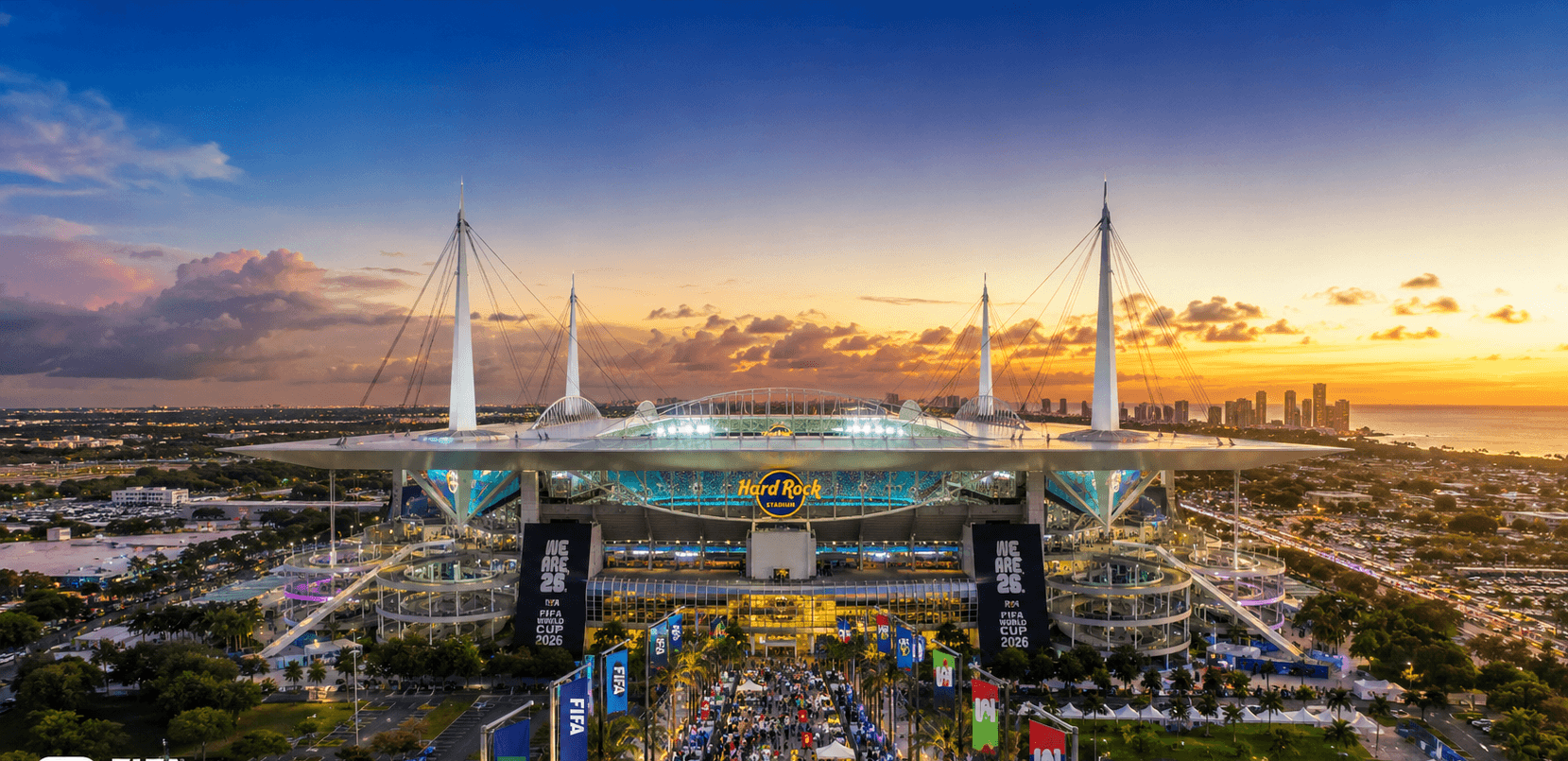
HVAC Systems in Stadiums and the challenges of the 2026 FIFA World Cup
More than a sport event
The 2026 FIFA World Cup will go down in history as the biggest so far. In addition to expanding to 48 national teams for the first time, the tournament is held in three huge co-host countries: the United States, Canada and Mexico.
While fans are waiting for football magic on the field, this championship represents the ultimate professional challenge for mechanical engineers. The matches will be played in extremely different climatic zones: from the temperate and pleasant climate of Vancouver, through the hot Monterrey, to extremely warm and humid areas such as Miami and Houston.
Why is designing HVAC systems in stadiums one of the biggest engineering challenges?
Reported by perspective of the profession, the modern stadium hasn ‘t just been an open sports field with stands for a long time. These are complex architectural and mechanical organisms. Within their composition there are luxurious VIP boxes, restaurants, superbly equipped locker rooms, media centers, server rooms and critical technical areas.
Each of these zones requires specifically designed heating, ventilation, and air conditioning (HVAC) systems. When you add to this the enormous changes in the number of users (from an empty stadium to 80,000 people in a few hours), the need for a huge proportion of outdoor air in indoor areas of the stadium and unpredictable weather conditions, it is clear that standard engineering solutions do not function here.
At Alfa Therm, where our mission is creating a healthy atmosphere through energy-efficient solutions, we know that air temperature is not the only criterion in such complex buildings. An equally important, and often much more challenging factor, is the moisture content in the air. Humidity directly affects the latent heat load, determines the required cooling capacity and dictates how the outside air is treated. That is why the wet bulb temperature (WBT) is one of the key design parameters that engineers experience in warm and humid climates.
Why are stadiums special facilities for designing HVAC systems?
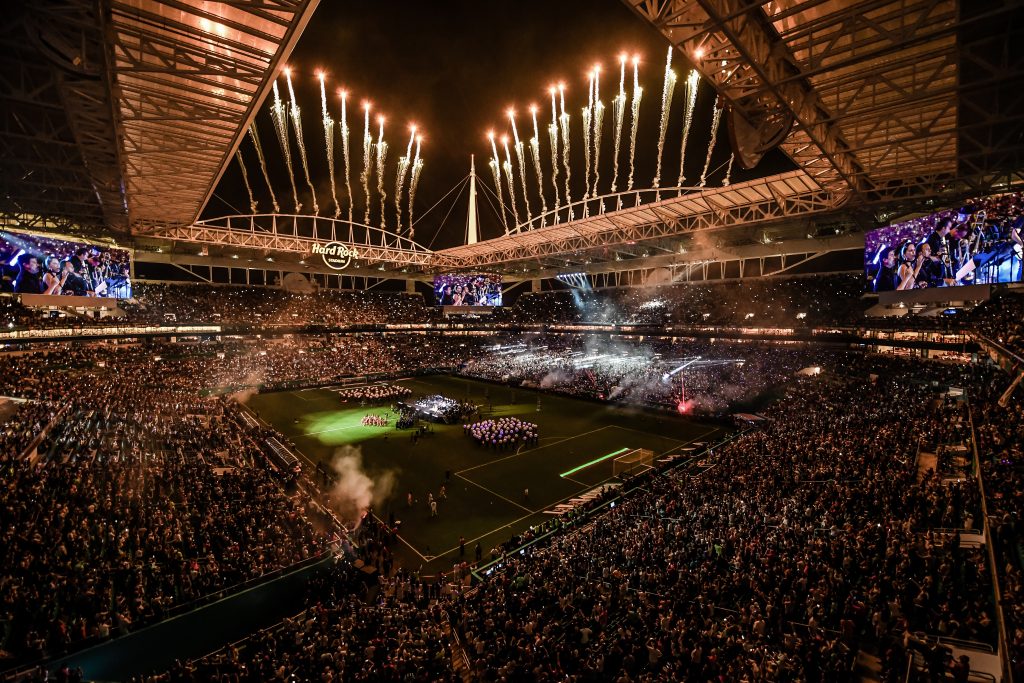
Unlike office or residential buildings, stadiums operate in extremely variable regimes. During the match, the number of users indoors under the stands increases suddenly. Thousands of fans in the halls, corridors, restaurants and VIP boxes generate huge internal heat gains (through body heat, breathing and humidity).
Ventilation systems must react instantly at these crucial moments, detect the load via sensors and provide enormous amounts of fresh, treated air in order to maintain the quality of the microclimate in the interior of the building.
The systems must respond to the requests of different zones within the stadium itself in seconds:
- Changing rooms require fast and efficient ventilation and strict humidity control in order to prevent the development of mold and unpleasant odors.
- VIP areas and boxes require superior thermal comfort and noiseless operation of the system.
- Kitchens and restaurants require powerful exhaust ventilation and air compensation.
- Technical rooms and server rooms require continuous and reliable heat dissipation 24/7.
All these requirements put enormous pressure on engineers when sizing climate controlled chambers, inverters, fans and advanced automatic control systems (BMS).
How do climatic conditions affect HVAC systems in stadiums?
The host cities of the World Cup are located in different climatic zones. That is why there is no universal HVAC solution. Miami and Houston are characterized by high relative humidity and dew point temperature. Monterrey has very high temperatures, while Vancouver has significantly milder conditions.
While Monterrey may have a higher temperature than Miami, the HVAC system in Miami is often more demanding because the outside air contains much more water vapor. Before bringing it into the room, it needs to be cooled below the dew point temperature in order to condense and remove excess moisture. Thus, a significant part of the cooling capacity goes to the latent heat load, and not only to lowering the temperature.
City | DBT | RH | The main challenge | Note |
Miami | 33°C | 75% | Dehumidification | High temperature dew point |
Houston | 34°C | 70% | Latent load | Warm and humid |
Monterrey | 36°C | 50% | Sensible load | Very high temperatures |
Vancouver | 24°C | 60% | Temperate conditions | Minimum requirements |

Why is dehumidification more important than cooling itself?
When designing HVAC systems in warm and humid climates, air temperature is not the only parameter. The amount of moisture that the outside air contains is equally important. As the relative humidity is higher, it is needed more energy to dehumidify the air first and then to cool it.
That is why in cities such as Miami or Houston, cooling systems are often sized according to dehumidification requirements, i.e. according to latent heat load, while lowering the temperature itself is a secondary task.
What happens in the air conditioning chamber when treating the outside air?
The process of air treatment in humid climates can be figuratively imagined as a struggle with physics inside an air-handling unit. The outside air, full of moisture and heat, passes through a refrigerant exchanger whose surface temperature is lowered below the dew point temperature. At that moment, a physical reaction occurs. Water vapor condenses on the surface of the exchanger (like drops on a glass of cold water in summer), which drastically reduces the specific humidity of the air. Only after we successfully eliminate this excess moisture, we get air whose temperature we can precisely regulate and distribute in the space.
In warm and humid regions, the refrigeration exchanger is primarily dimensioned according to strict dehumidification requirements, and only secondarily according to simple temperature reduction.
What is the difference between WBT and WBGT?
In discussions about sports and climate, there is often confusion between two key terms: WBT and WBGT. Although they sound similar, they have completely different purposes:
- WBT (Wet Bulb Temperature): It is used in psychrometric calculations and is the basis for designing HVAC systems and sizing refrigeration equipment.
- WBGT (Wet Bulb Globe Temperature): It is a composite index used to estimate heat stress on the human body. In addition to temperature and humidity, it takes into consideration wind speed and direct solar radiation.
While FIFA and medical teams use the WBGT index to determine when it is necessary to introduce breaks to rehydrate players or postpone a match, HVAC designers use WBT to ensure that the machinery inside the stadium can withstand such extreme conditions in the first place.

How do modern HVAC systems respond to climate challenges?
The warmer and wetter summers that we are facing in our region show that the lessons from Miami and Houston are quickly becoming our reality. Designing the system exclusively according to the dry bulb temperature (outdoor air temperature) is no longer enough. Modern engineering is therefore increasingly implementing advanced technological solutions:
- DOAS (Dedicated Outdoor Air Systems): Systems specialized exclusively for the treatment and dehumidification of outdoor fresh air before it enters the main distribution.
- Enthalpy recuperators (ERVs): Devices that allow the recovery of not only sensible heat, but also moisture, drastically reducing the energy required for air treatment.
- BMS regulation: Smart automation systems that use advanced climatereal-time data and psychrometric calculations to optimize system operation and reduce energy consumption.
In addition to these systems, high-efficiency heat exchangers, frequency-controlled fans, EC motors and advanced energy management systems are increasingly being used.
What can we learn from the World Cup 2026?
The World Cup 2026 will be the ultimate confirmation of how climatic conditions directly dictate the rules of engineering. But the real engineering art lies in the fact that these stadiums are not temporary, one-off projects built just for the needs of a month-long tournament. All host stadiums are already built, permanent and established facilities. They function as completely developed multifunctional buildings that host concerts, other sports and mass events outside the championship.
Designing and maintaining an HVAC system that must remain energy efficient, economically viable and maximally flexible for many years, regardless of whether the facility is half-empty or crowded, presents the pinnacle of the mechanical engineering profession. We are guided by this principle at Alfa Therm. Our focus is on engineering that delivers long-term and multifunctional solutions, capable of adapting to changes in operating regimes and weather extremes. Whether it is a world-famous arena or a modern business-residential complex in our region, the key to success lies in systems that are built to last and create a healthy atmosphere for future generations.
