


Energy Management in Practice: How INTERA TP Reduces Electricity Costs
How to Reduce Electricity Costs with Energy Management?
Electricity is no longer just an operating expense. Changes in energy prices, rising peak demand, the electrification of business operations and the growing share of renewable energy are changing how companies need to approach their energy systems.
The key question is therefore no longer simply how much energy a building consumes, but when it consumes it, where that energy comes from, how much it can generate and use on site, and whether its energy flows can be managed more efficiently.
This is where Energy Management begins.
Advances in photovoltaic systems, battery energy storage systems (BESS), digital platforms and artificial intelligence have enabled buildings to become more than passive energy consumers. However, installing individual technologies is not enough. Their real value emerges when generation, storage and consumption become parts of a single integrated energy system.
Alfa Therm developed and implemented this approach at INTERA Technology Park in Mostar, bringing together a photovoltaic system, battery energy storage and its proprietary EnergyCore software platform within one Energy Management solution.
The project aimed not only to increase renewable energy generation, but also to develop a system that could use available energy more efficiently, taking into account building consumption, solar generation, battery status and other parameters relevant to energy and financial optimisation.
The results demonstrate how an integrated approach can transform a building’s energy profile.
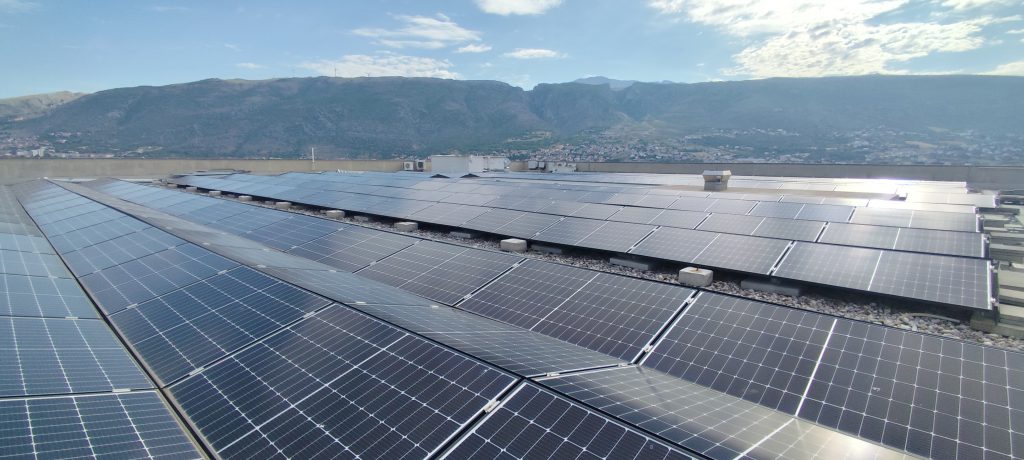
INTERA TP: From Energy Generation to Intelligent Management
The Energy Management model was developed and validated under real operating conditions at INTERA Technology Park.
The building’s energy system includes a photovoltaic installation with an installed capacity of 158 kWp and a Fox G-Max battery system with a power rating of 100 kW and a storage capacity of 215 kWh.
The role of the photovoltaic system is clear: to generate renewable electricity and reduce the amount of energy that needs to be drawn from the grid.
However, energy generation and consumption do not always coincide.
At one point, the solar installation may generate more electricity than the building can consume, while a few hours later, the building’s demand may exceed current solar output. This is where battery storage plays an important role, allowing generation and consumption to take place at different times.
Energy can be stored when it is available or when doing so is more economical, and used when the building needs it most.
However, a battery alone does not determine the best time to store energy, how much capacity should remain available or when stored energy should be used.
This requires a control layer.
At INTERA TP, that role is performed by EnergyCore, Alfa Therm’s proprietary software platform. It brings together data from the energy system and uses it to support the management of generation, storage and consumption.
As a result, the photovoltaic installation, battery, grid connection and building consumption are no longer separate elements, but interconnected parts of a single energy system.
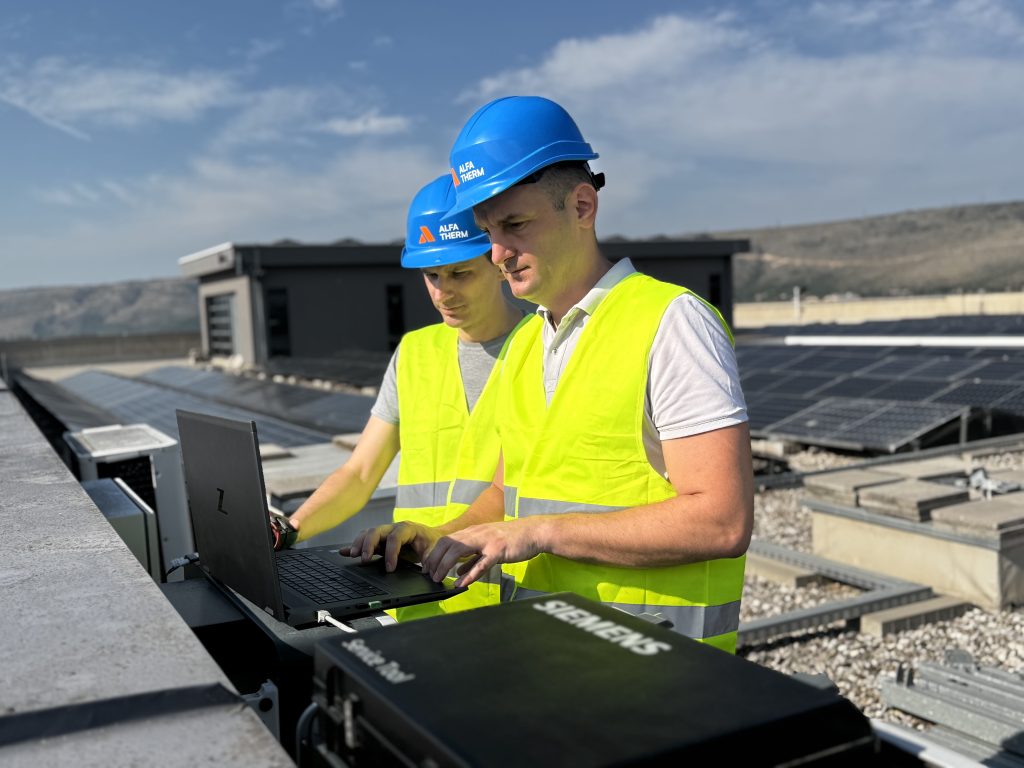
EnergyCore: Turning Data into a Foundation for Energy Decisions
Effective Energy Management depends not only on the availability of data, but also on the ability to interpret it.
EnergyCore continuously monitors the energy system’s key parameters: photovoltaic generation, building consumption, battery status and energy exchange with the grid.
This data does more than show the current state of the system. Analysing it helps explain how the building’s energy profile changes throughout the day, identify consumption and generation patterns, and assess how available energy resources can be used more efficiently.
A particularly important part of the system is the connection between historical data and predictive models.
For example, effective battery management cannot rely solely on how much electricity the solar installation is generating at a given moment. It also needs to account for expected generation over the coming period and the building’s forecast energy needs.
This is how Energy Management moves from reactive to predictive control.

Artificial intelligence in Energy Management: forecasting generation and consumption
A particularly important technological component of the implemented solution is the use of a machine learning model.
The model was developed using several years of electricity generation and consumption measurements. Solar generation forecasts also incorporate Global Horizontal Irradiance (GHI) data.
Why does forecasting matter?
Solar generation depends on a range of changing parameters. In addition to weather conditions and the time of year, actual output is affected by the specific characteristics of the photovoltaic installation and the building itself.
At INTERA TP, some photovoltaic panels face different directions, while parts of the building cast shadows on the panels at certain times of the day and year. As a result, the relationship between weather conditions and actual generation is not entirely linear.
The machine learning model uses historical measurements of the system’s actual behaviour to tailor generation and consumption forecasts to this particular building.
As more data is collected, the model has a larger dataset on which to develop and improve.
This has very practical value for Energy Management. When the system knows the expected solar generation and the building’s forecast energy needs, battery operation can be adjusted to anticipated conditions instead of responding only after a change has occurred.
A battery is more than an energy storage unit
A common mistake when considering a battery energy storage system (BESS) is to reduce its role to simple charging and discharging.
Within an integrated Energy Management system, the battery becomes a flexible energy resource.
How it is used depends on several factors: the building’s current and expected consumption, available solar generation, the battery’s state of charge and the economic factors associated with electricity use.
For example, if lower solar generation is expected, the system needs to retain enough stored energy for the periods when using it delivers the greatest value.
Conversely, when high solar generation is expected, sufficient battery capacity needs to be available to store as much of that energy as possible, rather than curtailing generation or leaving the energy unused.
This explains why the best battery operating strategy is not the same every day.
The value of an Energy Management system lies in its ability to adapt control strategies to actual and anticipated energy conditions.
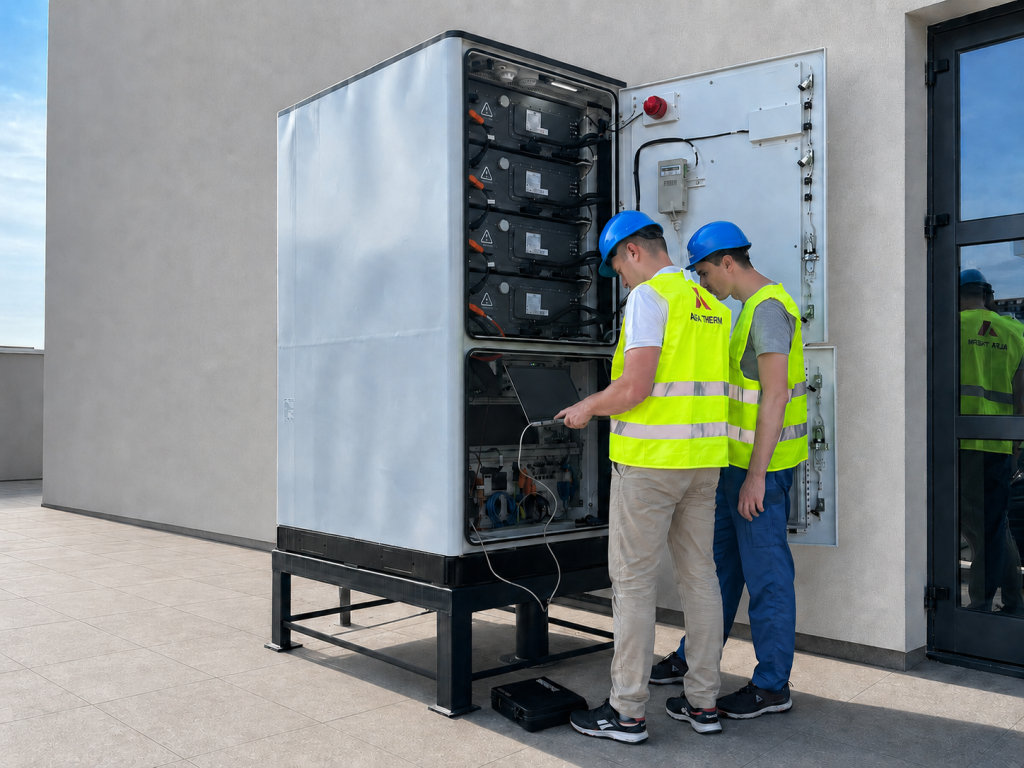
Tariff optimisation: not every kilowatt-hour has the same value
Optimising the economics of an energy system is not just about how much energy is consumed. When electricity is drawn from the grid matters just as much.
Buildings with time-of-use tariffs have additional opportunities for optimisation. When electricity prices are significantly higher during certain periods, shifting when energy is purchased and used can have a direct financial impact.
In this context, the battery does more than increase the use of locally generated solar energy. It allows some of the building’s energy needs to be met at a different time from when that electricity is purchased from the grid.
EnergyCore analyses energy flows alongside the relevant parameters, enabling available energy to be used during the periods when it delivers greater value.
This approach makes it possible to optimise onsite generation, storage and grid imports together, rather than treating each component separately.
Making better use of onsite solar generation
Another important benefit of integrating a battery system is improved utilisation of the existing photovoltaic installation.
The photovoltaic installation at INTERA TP is intended for self-consumption. Before the battery was integrated, generation had to be curtailed whenever output exceeded the building’s needs.
The battery changes this dynamic.
Surplus solar energy can now be stored and used later, increasing the proportion of onsite generation that the building actually uses.
At INTERA TP, this increased photovoltaic utilisation by 8%. According to the project results, it also shortened the payback period of the photovoltaic installation by approximately one year.
This result shows why an investment in battery storage should not be assessed in isolation. Its economic value also comes from making better use of the energy infrastructure already installed at the building.
The EnergyCore user interface: the entire energy system in one place
A complex energy system should not mean a complex user experience.
EnergyCore therefore provides a unified view of energy flows between the electricity grid, photovoltaic installation, battery system and building.
Users can monitor current generation and consumption, the status of energy resources, historical trends and achieved results in one place.
This level of transparency also matters from a management perspective. Instead of reviewing only the final electricity bill at the end of the month, Energy Management makes it possible to understand how energy was generated, stored and used during the period, and how those activities affected the final cost.
Energy data therefore becomes a basis for further technical and business decisions.
Energy Management results at INTERA TP
The ultimate value of an Energy Management system is measured by the results its technologies achieve together, rather than by the number of technologies integrated.
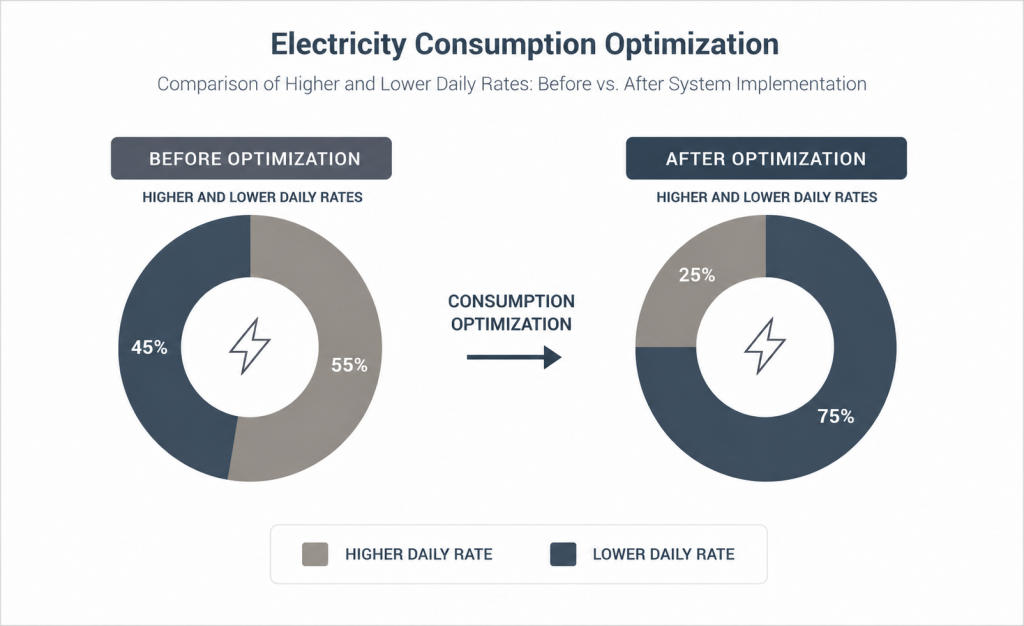
Before the battery system was installed, the average electricity consumption split across 2023, 2024 and 2025 was 45% during higher-tariff periods and 55% during lower-tariff periods.
In the first half of 2026, this changed to 25% during higher-tariff periods and 75% during lower-tariff periods.
This shift in the consumption profile shows how integrating battery storage and intelligent control enables more electricity to be purchased during economically favourable periods.
The results are also visible in specific daily data.
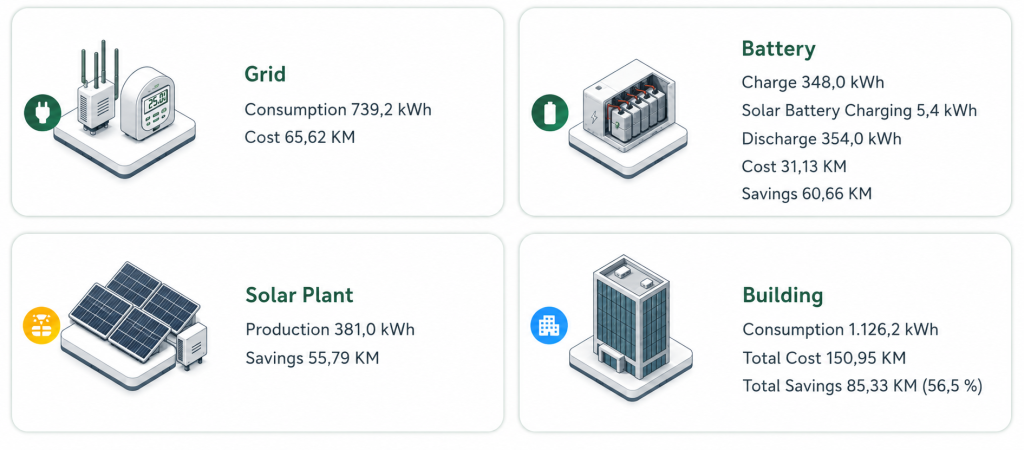
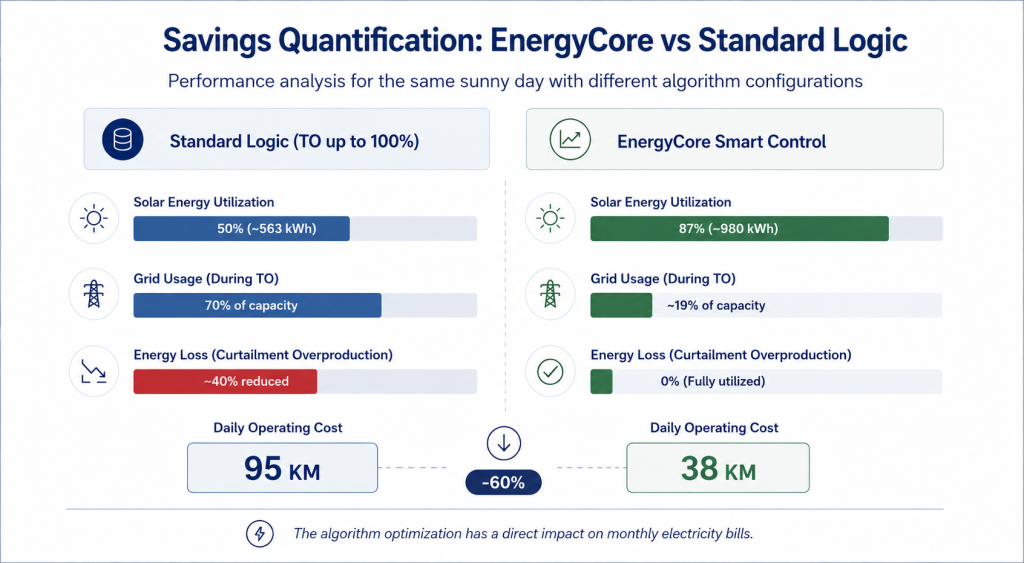
On one analysed day, the building’s electricity demand was 1,126.2 kWh, with a cost of BAM 150.95 under the reference scenario.
With the photovoltaic installation and optimised battery operation, electricity drawn from the grid amounted to 739.2 kWh, at a cost of BAM 65.62.
On that particular day, the electricity cost was reduced by 56.5%, equivalent to BAM 85.33.
This percentage relates to the specific day analysed and should not be interpreted as a universally expected level of savings for every building.
Alongside lower costs, the project delivered other measurable benefits:
- A shift in the higher-to-lower tariff consumption ratio from an average of 45:55 to 25:75.
- An 8% increase in photovoltaic utilisation.
- A shorter payback period for the photovoltaic installation.
- The potential to reduce peak power demand.
- Greater use of onsite renewable energy.
- Lower CO₂ emissions through increased use of solar energy.
- Greater energy flexibility and security for the building.
The estimated payback period for the battery system is 4.5 years.
The project results also show why the economic viability of Energy Management cannot be assessed through a single system component. The assessment needs to consider the combined impact on energy costs, the consumption profile, onsite generation, battery use, peak power demand and utilisation of existing energy infrastructure.
Why must an Energy Management solution be tailored to each building?
One of the most important conclusions from the INTERA TP project is that there is no universal Energy Management configuration.
The right solution depends on the building’s energy profile, peak loads, tariff structure, existing technical infrastructure, opportunities for onsite generation and the project’s objectives.
That is why an investment in a photovoltaic installation, battery storage or advanced energy management should begin with data analysis, rather than equipment selection.
Historical consumption shows when and how much electricity the building uses. Peak load analysis reveals opportunities for optimisation. The generation profile of an existing or planned photovoltaic installation shows how much energy can be used directly and how much could potentially be stored. The tariff structure also indicates whether shifting the timing of energy use can deliver financial value.
Only by bringing this data together can the technical solution be properly sized and its economic viability assessed.
This is precisely why Energy Management is neither a single product nor a single technology.
A photovoltaic installation generates electricity. A battery system stores it. Metering infrastructure provides data. Predictive models offer a view of what lies ahead. EnergyCore connects them within a unified management system.
Not every building needs the same level of control or the same technologies. In some cases, the greatest opportunity lies in better metering and consumption analysis. In others, it lies in optimising existing systems or integrating onsite generation, battery storage and advanced Energy Management.
The key is to identify where the greatest energy and financial potential lies for each building.
That is why, at Alfa Therm, we begin every Energy Management project by analysing the building’s actual energy profile. We use this data to identify opportunities for optimisation before defining the technical solution and the appropriate level of integration.
INTERA TP demonstrates the results of this approach under real operating conditions. The aim is to connect available energy resources within a system that delivers measurable technical and economic value.
Energy Management in practice: from data to measurable results
INTERA TP demonstrates that the value of an energy system does not come from a single component.
Without storage, a photovoltaic installation cannot always make full use of its available generation potential. Without effective control, a battery system cannot achieve its full energy and financial potential. Data without analysis provides an overview of current conditions, but does not necessarily show what needs to be optimised.
Connecting these elements creates an Energy Management system that can simultaneously monitor, analyse and optimise how a building generates, stores and uses energy.
EnergyCore was developed with this purpose in mind: a modular and scalable platform for intelligent energy management.
The concept is not limited to one type of building. It can be adapted to the different energy profiles of manufacturing facilities, office buildings, hotels, retail and logistics facilities, data centres and other large energy consumers.
INTERA TP provides a practical example of this approach under real operating conditions, from data collection and analysis to the integration of generation, storage, forecasting and energy management.
What is your building’s Energy Management potential?
Every building has its own consumption profile, technical infrastructure and opportunities for optimisation.
That is why an effective Energy Management project begins with understanding the current situation.
For an initial analysis, all you need to provide is your electricity bills for the past 12 months and basic information about the building. These can be used to analyse the existing energy profile, identify the areas with the greatest potential and assess the viability of individual measures.
Depending on the findings, the solution may include metering and monitoring, optimisation of existing systems, an Energy Management platform, a photovoltaic installation, battery storage or an integrated combination of these.
Contact our team for an initial assessment.
Together, we will uncover your building’s untapped energy potential and explore how to turn it into practical improvements and savings. The first step towards smarter energy management is understanding the opportunities you already have.
